Writing Updates
I am self-publishing my novel
12 October 2026 · 7 min read
About the Why and the How
Why do you want to traditionally publish your book?
That was the question I asked myself a few months ago. For the longest time, traditional publishing was a path I followed without considering why I even wanted to do this.
So when I finally asked myself that question while knee-deep in the query trenches (again), I came up with an answer:
I don’t know. Prestige?
Prestige is followed by a question mark, because I wasn’t sure if that was truly the reason, or the only thing I could come up with in that moment.
To sum it up: I didn’t have a real reason for wanting to traditionally publish.
Prestige, in my opinion at least, is not a great reason.
Traditional publishing is the path that is said to be the one an author should aspire to follow, something that validates work and makes sure the book is the best it can be before hitting the market and being enjoyed by readers worldwide. Only that isn’t necessarily how it goes for a lot of traditionally published authors either.
I once saw an agent say that choosing between a manuscript to request is like choosing between a muffin and a donut: an impossible choice. And choosing a muffin doesn’t mean the donut is bad; it just isn’t right at the moment. I don’t want my donut to rot in a drawer just because it wasn’t chosen, because what if somebody enjoys it? What if it becomes someone’s favourite book? I don’t have to tell you that self-published authors often get trad published later (with more leverage to negotiate better deals) or go the hybrid route: Andy Weir, Olivia Blake, and Matt Dinniman, to name a few.
Publishing is hard no matter which path you choose, and after doing my research and considering the pros and cons, it is something I have decided I can do myself.
A few more reasons why I ultimately decided to self-publish:
I have the last say. Yes, I am a perfectionist.
I can choose my editor and artists.
I can decide when to publish. (This one is a major one for me because I’m planning on applying to the Global Talent visa as a Potential Leader in the UK at the end of next year, and trad publishing can take years)
I have to market my book either way.
My novel can still be in bookstores. (Will it be easy? No. Is it guaranteed to be? No. Is it still possible? Yes.)
I can always go a hybrid route later on and will be in a position to negotiate better deals.
But enough about that. Let’s get into the good stuff.
How am I doing this?
How you self-publish a book depends on things like budget, expectations for the end result, skills you bring to the table, and the people around you. For reference: I am a perfectionist and want the book to be as good as it can be. I care about the writing craft. And most importantly, I have the financial means to invest in this project.
Here is a quick rundown of the steps I have taken so far before I go into a few in more detail:
Finish rough draft —> Read through and edit
Send 2nd Draft to beta readers —> Integrate feedback
Send 3rd Draft to beta readers because so much changed —> Edit once again for 4th Draft
Decide you want to self-publish, hire a developmental editor, and send your manuscript
Commission character art
Commission book cover illustrator
Have an existential crisis and integrate Dev edits for 5th Draft
Read through everything one more time, share new scenes with trusted author friends (6th Draft)
Send manuscript to Copy editor (That’s the step I just completed a few days ago) —> Integrate Copy edits (7thDraft)
Buy ISBNs
Set up IngramSpark and Amazon
Finalise Layout
Send out ARC applications
Read through everything once again
Send novel out to ARC readers —> Make last corrections if needed
Publish!
And throughout it all, of course, the bane of my existence: MARKETING!
Phew! As you can tell, it’s more of a marathon than a sprint, but it has been a very rewarding process so far. Now, let’s get into a few specifics.
1. Beta readers
I am very fortunate to have completed a Masters in Creative Writing at Edinburgh Napier University in 2025, which left me with talented author friends who have been kind enough to read through my work and give valuable feedback,
Having feedback from people who have at least a little bit of craft knowledge while also reading in your genre is essential if you want to make your book as good as it can be. You can read more about my beta reader journey here.
If you are planning on using beta readers for your novel (which I would recommend), I’d say choose a mix of readers and writers to receive feedback on the craft and commercial side.
2. Developmental editor
To be honest, I was a little hesitant to work with a developmental editor, because I naively thought that two rounds of beta reading already told me everything I needed to know.
Oh boy, was I wrong.
While the pacing and structure of my novel were good, the editor pointed out some concerns regarding the relationships between the main characters and worldbuilding. I took their suggestions on board, and now I have a manuscript that feels more cohesive and layered.
3. Copy editor
Now, as some of you might already know, English isn’t my first language, so a copy editor was a non-negotiable for me. This is also a step in traditional publishing.
4. Character Art
One of the things I dislike about being a self-published author (but would also have to do as a trad-published author) is marketing. I have an author Instagram and TikTok, and am now trying to build my email list on this website for ARC signups, etc.
It takes a lot of work, but hopefully it will be worth it in the end.
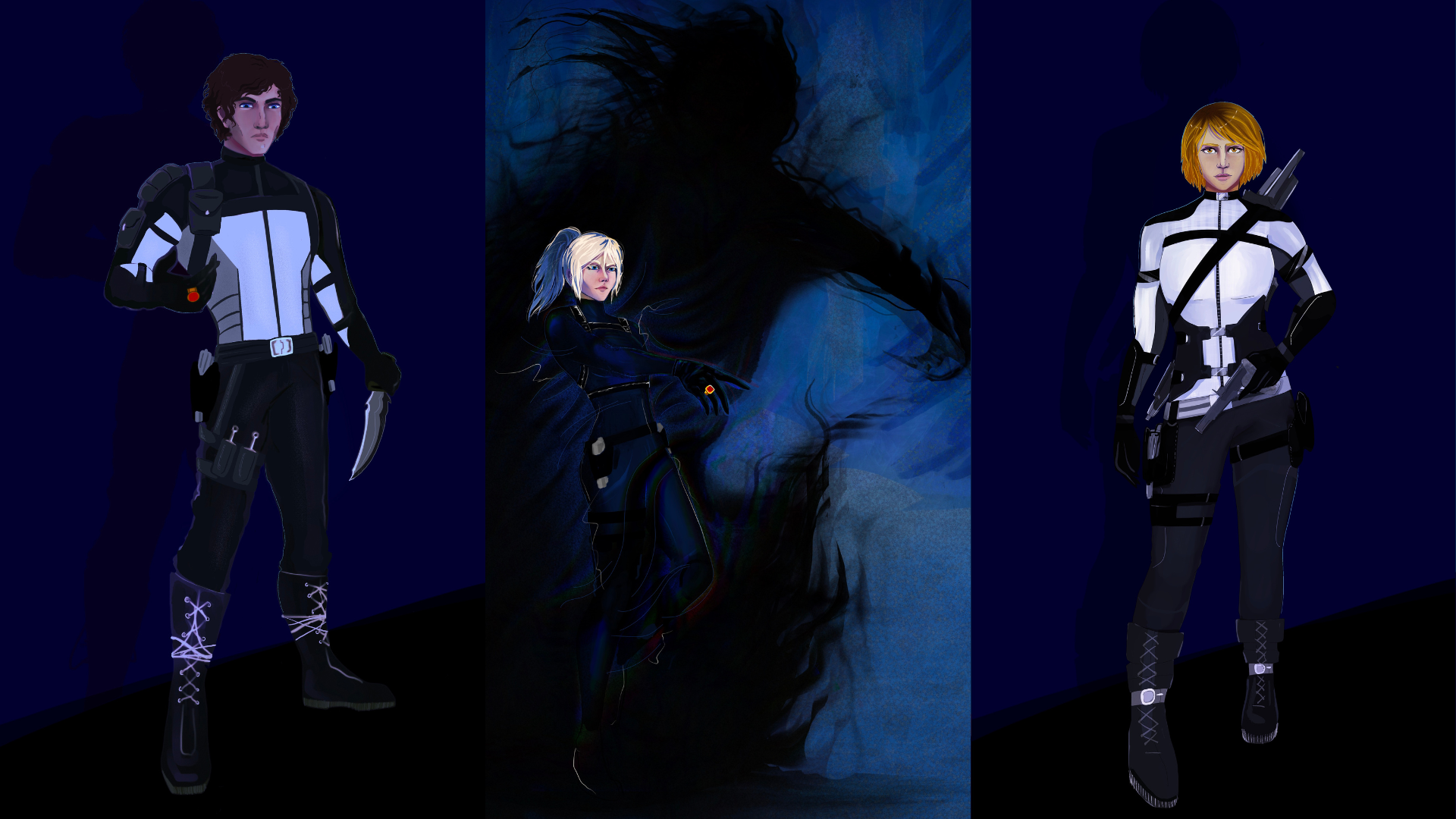
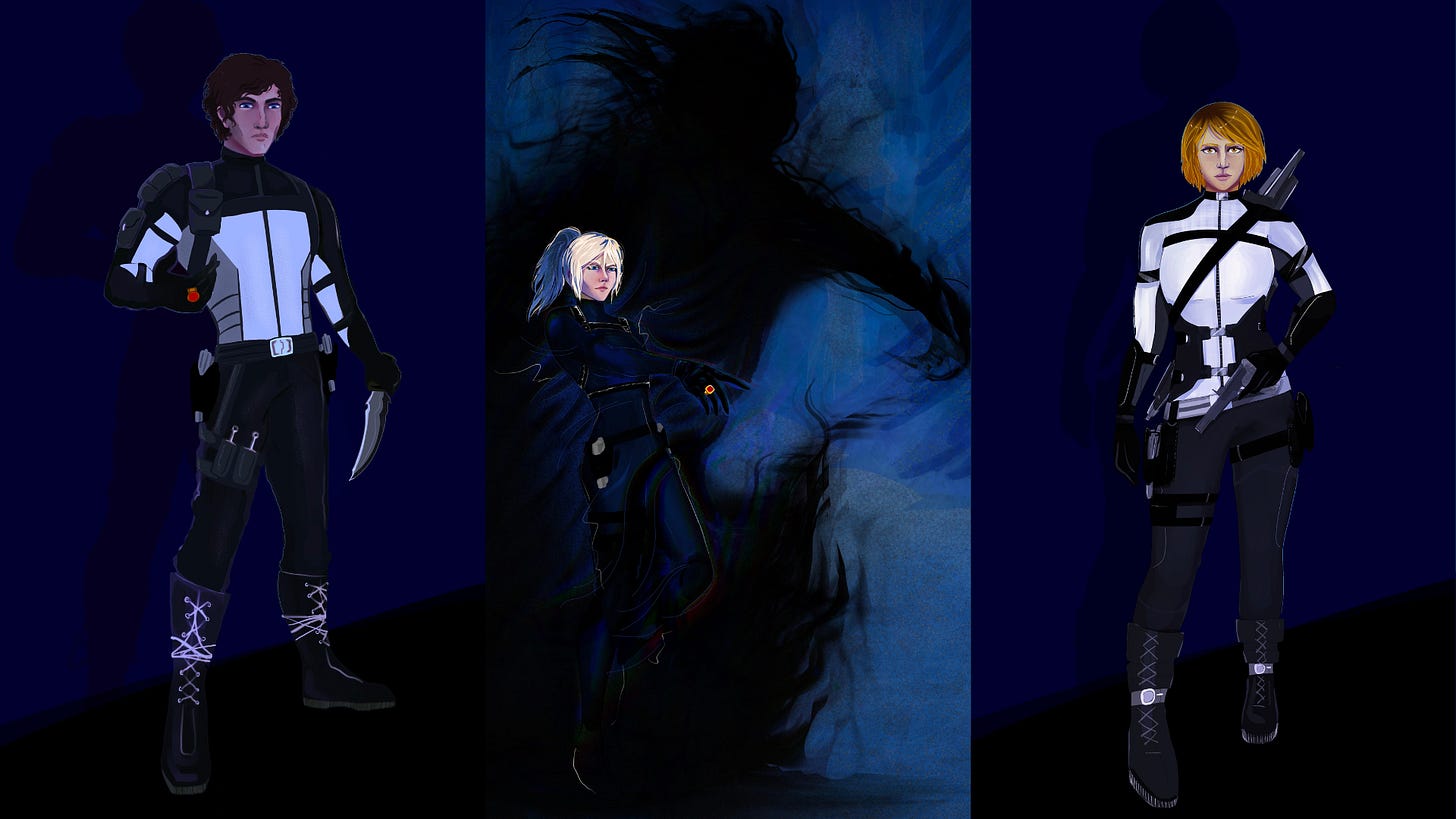
Character Art has been a great asset in marketing my novel, as it makes it easier for readers to connect with my characters and creates cohesion in my posts.
The talented DROPLESTSOFLORE created the art for me, and look how they delivered!
5. Book Cover
I have commissioned an artist who has made some of the most beautiful covers I have ever seen for my book, and I can’t wait to share the results with you!
A professional-looking book cover is essential for self-published authors, as it helps them blend in with genre-compatible novels on the market and build reader trust.
I have picked up a book because of a gorgeous cover before, and I’m sure I’m not the only one.
6. Layout
The layout will be the one thing I will do myself. I have had a kind indie author share their formatting with me, and have also found open-source code for formatting, so I don’t have to invest in expensive programs like Vellum or Atticus.
That being said, if both of these methods don’t give me the desired results, I am open to reverting back to the established formatting programs.
A lot of work goes into self-publishing a novel, and not everyone has the resources to go down that path. If you don’t have the means to self-publish at a certain quality, prefer a hands-off approach, and don’t mind how long it takes to publication, trad publishing is the way to go!
If you’re like me and you want to become a published author no matter how, have the means, the time, and the patience, then self-publishing might be for you.
In the end, there isn’t a universally right or wrong choice. Every path to publication is valid.
So, great news! I am publishing a book!
After months and months of writing, editing, crying, despairing, and doing everything again, I have decided to take this huge step and leap of faith.
A Darkness So Deep is coming out in the first week of December 2026. It is a Dystopian Fantasy set in an alternate Europe, where humans have found a way to bind demons to rings to wage their wars.
Minna von Bergen always knew what she would be: a demon-assassin, trained since childhood to take out enemies of the Alpine Union with her demon, Morax. When the war threatens to upend her future and everything she loves, Minna sets out to hunt down the terrorist organisation responsible for her father’s death and the continuation of the war. Joined by Morax and her classmate she can’t stand, Aaron, Minna learns that things aren’t as she has been raised to believe.
And ending the war might lead to the death of millions.
ARC sign-ups will open soon, and ARCs will be sent out at the beginning of November.
Consider subscribing to the newsletter below to be one of the first to hear about ARCs, publication dates, and anything else publishing-related.